


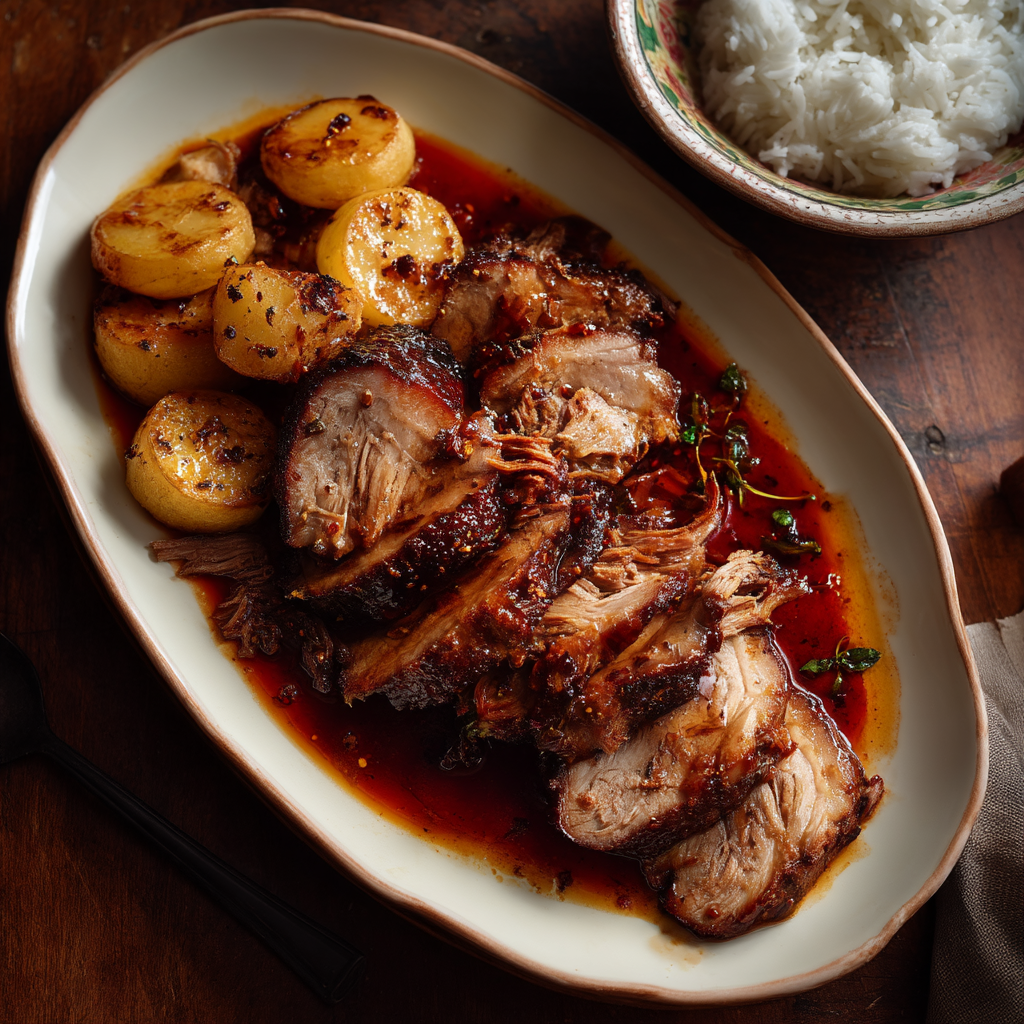
Kapampangan Pork Asado: Braised with Citrus-Tomato Reduction and Crisp Potatoes
Recipe Overview
Dish Name: Kapampangan Pork Asado with Tomato-Liver Reduction Cuisine: Modern Kapampangan | Category: Meat Course | Serves: 4 Prep Time: 25 minutes (plus overnight marination) | Cook Time: 90 minutes | Total Time: 2 hours 15 minutes
Why This Works
Kapampangan pork asado stands apart from its Chinese cousin through aggressive acidity and savory depth rather than sweetness. The overnight calamansi-soy marinade breaks down connective tissue in pork shoulder while building foundational flavor. Liver spread, the signature Kapampangan touch, transforms the braising liquid into a velvety, umami-rich sauce that clings to each slice. The method here prioritizes proper searing to develop fond, slow braising to achieve fall-apart tenderness, and a final reduction that concentrates the tangy-savory profile Pampanga cooks have perfected over generations. Fried potatoes provide textural contrast and absorb excess sauce. This recipe addresses the common confusion between sweet Chinese asado and the distinctly Filipino version, delivering the authentic tangy celebration dish that belongs on festive tables.
Ingredients (Serves 4)
For the Marinade:
- 1kg pork shoulder (kasim), whole piece with moderate marbling
- 120ml calamansi juice (or 60ml lemon juice + 60ml orange juice)
- 80ml soy sauce (preferably Filipino brand)
- 6 cloves garlic, smashed
- 1 large red onion, roughly chopped
- 10 black peppercorns, cracked
- 3 bay leaves
For the Braise:
- 45ml neutral oil (canola or vegetable)
- 1 large red onion, finely diced
- 8 cloves garlic, minced
- 400ml tomato sauce (preferably Del Monte or similar Filipino brand)
- 60g liver spread (Reno brand preferred)
- 15ml soy sauce
- 2 teaspoons dried oregano
- 500ml water
- Salt and freshly ground black pepper
For the Potatoes:
- 400g Yukon Gold potatoes, peeled and cut into 5mm-thick rounds
- Neutral oil for shallow frying
- Salt
Optional Enrichment:
- 2 chorizo de Bilbao sausages, sliced diagonally
- 4 Vienna sausages, halved lengthwise
Method
Mise en Place (25 minutes)
Combine marinade ingredients in a large zip-lock bag or non-reactive container. Score the pork shoulder in a crosshatch pattern (1cm deep cuts, 2cm apart) to allow marinade penetration. Submerge pork in marinade, seal, and refrigerate for 12-24 hours, flipping once at the halfway point. Before cooking, bring pork to room temperature (30 minutes). Prepare all aromatics. Have tomato sauce, liver spread, and water measured and ready. Slice potatoes and hold in cold water to prevent oxidation.
Sear the Pork (12 minutes)
Remove pork from marinade and pat completely dry with paper towels. Reserve marinade and aromatics. Heat oil in a heavy-bottomed Dutch oven or braising pan over medium-high heat until shimmering. Sear pork on all sides until deeply browned, approximately 3 minutes per side. Proper browning develops the fond that builds sauce complexity. Transfer pork to a plate.
Build the Sauce Base (8 minutes)
Reduce heat to medium. Add diced onion to the same pan and cook in the residual fat until softened and beginning to caramelize, about 4 minutes. Add minced garlic and cook until fragrant, 45 seconds. Deglaze with reserved marinade (including the aromatics), scraping up all browned bits from the pan bottom. Let marinade reduce by half, approximately 3 minutes.
Braise the Pork (75 minutes)
Add tomato sauce, 15ml soy sauce, dried oregano, and 500ml water to the pan. Stir to combine. Return pork to the pan along with any accumulated juices. The liquid should come halfway up the pork; add more water if needed. Bring to a boil, then reduce to the lowest simmer. Cover and cook for 60 minutes, turning the pork every 20 minutes for even cooking. The pork is done when a fork slides in with minimal resistance.
Finish the Sauce (15 minutes)
Remove pork from braising liquid and set aside to rest, loosely tented with foil. Strain the braising liquid through a fine-mesh sieve, pressing on solids to extract maximum flavor. Discard solids. Return liquid to the pan and bring to a vigorous boil. Whisk in liver spread until fully incorporated. Reduce heat to medium and simmer until sauce coats the back of a spoon, 8-10 minutes. The liver spread adds body and a distinctive savory depth. Season with salt and pepper. If using chorizo and Vienna sausages, add them during the final 5 minutes of reduction.
Prepare the Potatoes (10 minutes)
While sauce reduces, drain potato slices and pat completely dry. Heat 1cm of oil in a large skillet over medium-high heat to 180°C. Fry potatoes in batches without crowding until golden and crisp, 3-4 minutes per batch. Drain on paper towels and season immediately with salt.
Slice and Plate
Let pork rest 10 minutes after removing from liquid. Slice against the grain into 1cm-thick pieces. Arrange slices on a warm platter. Spoon sauce generously over the pork. Arrange fried potatoes around the perimeter. Serve immediately with steamed rice.
What You Need to Know
Marination matters. Overnight marination allows acids to tenderize the meat and soy to penetrate deeply. Four hours minimum if pressed for time, but overnight is superior.
Liver spread is non-negotiable. This ingredient distinguishes Kapampangan asado from other Filipino braised pork dishes. It thickens the sauce and adds a distinctive umami backbone that calamansi and tomato alone cannot provide. Reno brand is traditional, but any pork liver spread works.
Sauce consistency determines quality. The final sauce should be thick enough to coat the pork without being gloppy. If too thin after reduction, simmer longer. If too thick, add water in 30ml increments. The sauce should flow slowly off a spoon, not drip.
Make-ahead advantage: This dish improves overnight. Cook completely, refrigerate in the sauce, and reheat gently. The fat that solidifies on top can be removed for a leaner dish, or stirred back in for richness.
The Result
Properly executed Kapampangan pork asado delivers tender pork that pulls apart with a fork, bathed in a glossy, rust-colored sauce that balances aggressive acidity with savory depth. The first bite should hit with bright citrus notes, followed by umami richness from the liver spread and soy, finishing with subtle oregano and garlic. The meat holds together in slices but yields immediately to pressure. Crisp potatoes provide textural relief and serve as edible sponges for excess sauce. The dish looks rustic and honest on the plate, nothing fussy, with deep mahogany sauce pooling around golden pork slices.
Nutrition Information Based on a 2,000 Calorie Diet (Per Serving)
| Nutrient | Amount | % Daily Value |
|---|---|---|
| Calories | 620 kcal | 31% |
| Total Fat | 38g | 58% |
| Saturated Fat | 12g | 60% |
| Cholesterol | 145mg | 48% |
| Sodium | 1,380mg | 58% |
| Total Carbohydrates | 32g | 11% |
| Dietary Fiber | 4g | 16% |
| Sugars | 8g | – |
| Protein | 42g | 84% |
| Vitamin A | 680 IU | 14% |
| Vitamin C | 18mg | 30% |
| Calcium | 65mg | 6% |
| Iron | 4.2mg | 23% |
Flavor Balance
Sweet (3/10): Tomato sauce provides natural sweetness, balanced by the acidity of calamansi. No added sugar maintains the Kapampangan profile distinct from Chinese-style asado.
Salty (7/10): Soy sauce in both marinade and braising liquid drives salinity. Liver spread adds secondary salt along with umami. Proper seasoning at the end calibrates final salt levels.
Sour (8/10): Calamansi juice dominates the acid profile, cutting through pork fat and providing the signature tangy character that defines Kapampangan asado. Tomatoes contribute supporting acidity.
Bitter (2/10): Minimal bitterness from oregano and caramelized onions provides background complexity without overwhelming the primary flavors.
Umami (9/10): Liver spread, soy sauce, and long-braised pork create profound savory depth. The reduction concentrates glutamates, making this an umami powerhouse that pairs naturally with rice.
Wine Pairing
Recommended: Australian Grenache from McLaren Vale
Why: Kapampangan pork asado’s high acidity and savory intensity require a wine with fruit concentration and moderate tannins. McLaren Vale Grenache delivers ripe red fruit (cherry, raspberry) that bridges the tomato sauce while its medium body matches the pork’s richness without overwhelming it. The wine’s natural spice notes (white pepper, dried herbs) complement the oregano and garlic in the dish. Grenache’s moderate alcohol and soft tannins work with rather than against the tangy sauce, while the wine’s inherent earthiness mirrors the liver spread’s savory depth. The fruit-forward character provides relief from the dish’s acidity without adding sweetness.
Alternatives:
Australian Shiraz-Grenache Blend (Barossa Valley): The Shiraz component adds structure and darker fruit notes that stand up to the rich sauce, while Grenache maintains approachability. The blend’s peppery finish echoes the black pepper in the marinade. Works particularly well if you’ve included chorizo, as the wine’s robust character matches the sausage’s spice profile.
Australian Chardonnay (Adelaide Hills): For white wine preference, choose an oak-aged Chardonnay with moderate acidity. The wine’s buttery texture complements the liver spread’s richness, while citrus notes harmonize with the calamansi. Oak aging adds vanilla and toast that bridge the caramelized elements from searing. The wine’s weight matches the pork without the tannic interference of reds.
HACCP-Compliant Storage and Safety
Cooling: Cool pork asado from serving temperature (above 60°C) to 21°C within 2 hours, then to 4°C within an additional 4 hours. Transfer to shallow containers (no more than 5cm deep) to accelerate cooling. Do not cover until temperature drops below 21°C.
Refrigeration: Store in airtight containers at 0-4°C for up to 3 days. Keep sauce and pork together to prevent drying. Store fried potatoes separately in paper-towel-lined containers; they will lose crispness but remain edible.
Freezing: Freeze pork in sauce (without potatoes) at -18°C or below for up to 3 months. Portion into meal-sized containers before freezing. Label with date and contents.
Reheating: Reheat to internal temperature of 75°C, holding for at least 15 seconds. Stovetop method preferred: place pork and sauce in covered pan over medium-low heat, stirring occasionally. Microwave acceptable if stirred every 60 seconds to ensure even heating. Add 30-60ml water if sauce has thickened excessively during storage.
Disposal: Discard any pork asado held at room temperature for more than 2 hours, or refrigerated beyond 3 days. Discard frozen portions showing signs of freezer burn or stored beyond 3 months. When in doubt, discard.
